Daily Behavioral Goals

I’ve been thinking about my goal setting for 2016 and have decided to try something a little different this year.  While I will still have goals in the 7 areas of Zig Ziglar’s Wheel of Life, I think I’m going to also adopt some daily behavioral goals that I can focus on every day.  Here’s what I’m talking about.

Usually my goals consist of targets that I’m trying to achieve in a month, quarter, or year.  That’s good, but I also want to have goals that will help me daily to become more like the person I want to be.  For these areas of my life I am putting together behavioral goals that I plan on demonstrating every day.

For example, a behavioral goal I have for the year is to be a more engaging husband.  The behaviors for achieving this goal look like one or more of the following:

  • I will make sure I’m giving my wife at least 15 uninterrupted minutes every day where I am communicating and giving her my full attention.
  • My attitude toward her will be positive and liberally sprinkled with words and actions that show love and acceptance versus judgement and frustration.
  • My thoughts toward her will also be positive and I will not expect that her thinking or actions should be the same as mine. See last week’s blog.

When I lay my pillow down at the end of each day, I will easily be able to tell whether or not I achieved my goal of being a more engaged husband.  All I have to do is ask whether or not I did one or more of these behaviors today.  If the answer is, “Yes”, nice work!  I achieved my behavioral goal that day.  If the answer is, “No”, then I have an opportunity to do better at it the next day.  What’s cool is that even if my answer is, “Yes”, I still have an opportunity to do better the next day!

Daily behavioral goals give you immediate feedback.  They can also pave the way for stringing several days of success together, which will ultimately lead to the formation of a good habit.  With each good habit we work toward and form, we become more like the person we want to be.  We become an even better version of our self.

Are there any behavioral goals you’d like to start working on that will help you form some good habits?  I’d suggest starting with just one and focusing on it for several weeks until you start having several days of success, then focus on another behavioral goal.  Repeat this process until December 31, 2016, and then on January 1, 2017, begin the process anew.

Use the power of daily behavioral goals to get immediate feedback as you journey toward being the best version of yourself.  There’s no need to wait for 1 year to see if you’ll hit your goal.  You’ll be able to tell as soon as you go to bed this evening.


Great Idea! Now What?

In a previous post I wrote how your head was a great place for having ideas, but a lousy place for keeping them.  This is because it’s so easy to lose ideas in the constant clutter of thoughts going on in our heads.  This week, I’d like share some actions we can take when we come up with a good idea, to ensure they are not forgotten.

First, create a system for capturing ideas.  With the digital revolution in full swing, there are several electronic options to quickly capture the idea written down.  These can include:

  • An audio recording
  • An email or text to yourself
  • An electronic list
  • A smartphone app designed for taking notes
  • Pictures taken with smartphone

Since most folks have a smartphone on or near them at all times, it makes sense that this would be a good tool to use to capture ideas.  However, we shouldn’t discount “old-school” mediums such:

  • Notebooks
  • Whiteboards
  • Sticky notes
  • Journals

What I have found is that I usually rely on a couple different methods for capturing ideas.  I think it’s important to settle on 2-3 preferred methods that work for you, because having too many ways of capturing ideas can lead to clutter and cause ideas that get lost.

Next, after you’ve developed a system for capturing your ideas, create a system to consolidate all your ideas.  By this, I mean taking all the ideas you had and placing them in a consistent location so they are easy to locate in the future.  Again, this collection could be a digital or an old-school method.  Just pick a one that works for you and make sure consolidating the ideas you’ve captured becomes part of your daily routine.

Finally, the most important step you can take after capturing and consolidating your ideas is to develop a plan to take action on your highest priority ideas.  If you’re like me, most of your ideas won’t be any good.  However, when you do have an idea that is good and you want to implement, do something that reminds you to put your idea into action.  For me, that often looks like setting a reminder in my smart phone to alert me at a certain date and time when I will be in a position to take action on my idea.

There are several methods that can be used to capture, consolidate, and act on your ideas.  The important point is to have specific methods at each step so you’ll be able to put your ideas into actions.  Actions that could potentially change your life.

Without a plan to do something with the ideas we have, they are often relegated to being just ghosts of ideas that disappear soon after we have them.  It’s time to start collecting and acting on the treasure of ideas our minds so often provide

Cultivating Good Ideas

I started this blog 153 weeks ago with the goal of consistently posting one entry per week.  So far, I haven’t missed a week yet!  What’s amazed me most about this journey is how every week I find a new idea to write about.

I like to post my entries on Saturday, but on Sunday, 6 days prior to posting, I usually have no idea what I’m going to write about.  It isn’t until I start going through my weekly routines of reading, having conversations with people, and listening to positive content that an idea for a topic pops into my mind.  These ideas burst onto the stage of my mind without any warning.  It’s an amazing process that I’ve really enjoyed over the past 153 weeks.

Ideas don’t just happen.  Whether it’s ideas for writing, planning, or myriad other forms of creation, I think there are certain disciplines we can practice to greatly increase our likelihood of coming up with good ideas.  Those disciplines include the following:

Expect that you can and will come up with good ideas

Henry Ford stated it well when he said, “Whether you think you can or think you can’t, you’re right.”  Pay attention how you talk to yourself regarding your ability to come up with ideas.  Instead of telling yourself you’re not good at coming up with ideas, change the internal dialog and state how capable you are of coming up with not just one, but several good ideas.

Consume positive content

Positive content, in the form of conversations, reading, podcasts, or any other method, is the fertilizer that helps grow new thoughts and ideas.  Your ideas will come out of whatever you have been putting into your mind, so be mindful of what you’re allowing in.

Set a deadline to come up with good ideas

For me, I imposed an artificial deadline of generating a blog post every week.  This created a sense of urgency that forced me to generate an idea.  So far it’s worked out well.

Practice cultivating good ideas

Every day, write down 10 good ideas on any topic.  It can be anything from ideas for generating extra money to titles for a make-believe TV show.  The objet here is to just get in the practice of generating ideas.  The more we do it, the better we can become at coming up with ideas.  James Altucher says that this is how you stretch your “idea muscle” and become and “idea machine”.

Set yourself up to be a generator of good ideas by following the steps above, or share some of your own ideas for generating ideas in the comments below.

Ideas are the starting point of all new adventures.  If you want to have a more adventurous life, you only need to start having more ideas.

Seven Tips to Keep from Losing Your Mind to Emotion

When emotion goes up, intelligence goes down.”  ~Mari Smith; Social Media Thought Leader

When I heard this quote from Mari Smith on the Entreleadership Podcast, I was instantly able to recall several accounts from my own life when I’ve been in this very situation.  I cringed, because, unfortunately, those have not been some of my finest moments!

What about you?  Have you ever been in a position where you feel the emotion rising, while at the same time your intelligence waning?  It’s not a good feeling.  Historically, I haven’t realized this was occurring until after the conversation or interaction where it occurred.  By then, it’s too late to change course because common sense and better judgement have already left the station.

So what can we do to keep from losing our minds when we notice our emotions starting to heat up?  Here are 7 suggestions to keep emotions from depleting our intelligence.

  1. Know the types of interactions that cause you to become emotionally charged so that you can either avoid them or be aware of the possibility of reacting emotionally.
  2. Know how you react physically when you’re emotionally charged. Do your hands get sweaty, your face get warm, or you ears get hot?  Knowing how you react can help you identify when you’re becoming emotionally charged.
  3. Determine in advance how you will respond when you feel yourself becoming emotionally charged. If we don’t know how we’ll respond in that moment, we’ll likely put ourselves on auto pilot and let emotions take over.  Usually not a good option.
  4. In the moment, take a few deep breaths. I know this sounds cliché, but it works.
  5. Put things in perspective. Ask yourself what’s at stake and determine if it’s really worth getting worked up for.
  6. Look for something positive like humor, a silver lining, or opportunities to connect with the other side on a human level.
  7. Decide not to get worked up.  This may sound hard, but we have far more control over our emotions than we realize.

There seems to be no shortage of things to spin us up and charge our emotions.  The good news is that this gives us a lot of opportunity to practice the tips above.

Being emotionally charged up and momentarily losing our intelligence does not help us to be at our best.  Decide today to be in charge of your emotions and not a follower of them.  That sounds good to me, because I can’t afford to lose any of the precious little intelligence I have!

What Are You Allowing In

I’ve been thinking this week about how what we fill our minds with today influences our thoughts in the future.  I’m also surprised at how quickly our mind comes up with thoughts that are influenced by what we’re allowing into our minds.

This can be a great thing if we’re filling our minds with good content that reinforces good thinking.  The other side is that a lack of discernment over what content we allow into our minds can lead to a polluted thought life that will manifest itself in equally polluted speech, attitude and behavior.

Earl Nightingale gave a great illustration of this by comparing our minds to a plot of land for a garden.  If we plant corn seeds in this pot of land, the only crop that we can expect the land to produce is corn.  It will not produce carrots, peas, beets, or potatoes.  We’ve sown seeds of corn.  The only thing the land will produce in return is corn.

Our minds are like that plot of land, and the content we’re allowing into our mind today are the seeds of our future thoughts, beliefs and attitudes.  Like the plot of land, our minds will only return a harvest based on the seeds we sow in it.  If we’re filling our mind with the seeds of positive input, our thoughts will be positive.  Likewise, seeds of negativity will yield and equally negative harvest.

So what are these “seeds” that we plant in our mind?  What do they look like and where do we get them?

These seeds come in many forms, such as:

  • Books we read
  • People we interact with
  • Games we play
  • Movies we watch
  • Music we listen to
  • Media we consume
  • Environments we spend time in
  • Communities we are a part of

Since they have such a significant impact on our thinking, it is so important to be aware of the content we allow into our mind.  We would never intentionally put sand or water into the gas tank of our car, because that would have a damaging impact on the car’s engine.  Our minds should be treated likewise, because the wrong input, which leads to wrong thinking, can have an equally damaging impact.

There are 2 things we can do today to start having better, more positive thoughts:

  1. Be aware of the input we’re allowing into our minds. Pay attention to the content we’re taking in and the conversations we’re having.  If they’re negative, change them.
  1. Be aware of the thoughts you’re having. When you notice they’re negative, replace them with a positive thought.  Left unchecked, we will go where our thoughts take us.  I’d prefer to be taken somewhere positive.

Become aware of the content you’re allowing into your mind and begin sowing the seeds of good thoughts in your mind today.  A harvest of good thinking in the future awaits.

You Already Know

My wife has been traveling for work a lot lately, so she’s interesting in looking for tips to help her pack lighter or more efficient.  After she had looked up some tips on-line I asked her, “So what did you learn that you can start applying?”  Her response was, “Nothing I didn’t already know.”

That response got me thinking.  How many things do we already know we should be doing, that we aren’t?  My guess is that in the gap between where we are and where we want to be, we already know the steps we need to take to get there.  At a minimum, we usually know the specific step we should take right now.

The real question then becomes; what’s keeping us from doing what we already know we should be doing?  There are several potential reasons, such as:

  • Fear – of all sorts
  • Indecision
  • Lack of confidence
  • Lack of focus
  • Laziness
  • Maybe we just don’t feel like putting forth the effort

So there we sit, where we’ve always been because we know what we need to do, but don’t do it.

Think about that.  When we already know what we need to be doing to achieve a desired outcome, and fail to act, the only thing standing between us and our goal… is us!

What do you already know you should be doing, that you currently aren’t?  Do you already know what you need to be doing in order to:

  • Improve a relationship
  • Get in better health/shape
  • Manage your finances better
  • Advance your career
  • Improve yourself intellectually or spiritually
  • Live the life you desire

If you answered, “Yes”, then starting today, get out of your own way and do what you already know you need to be doing.  You are not only the biggest obstacle to overcome in achieving your dreams; you are also the greatest force to bring them about.

Your Comfort Zone and Beyond               

We all know that in order to stretch and grow we must consistently get out of our Comfort Zone.  But just how far out of our Comfort Zone should we be going?  Is there a limit?

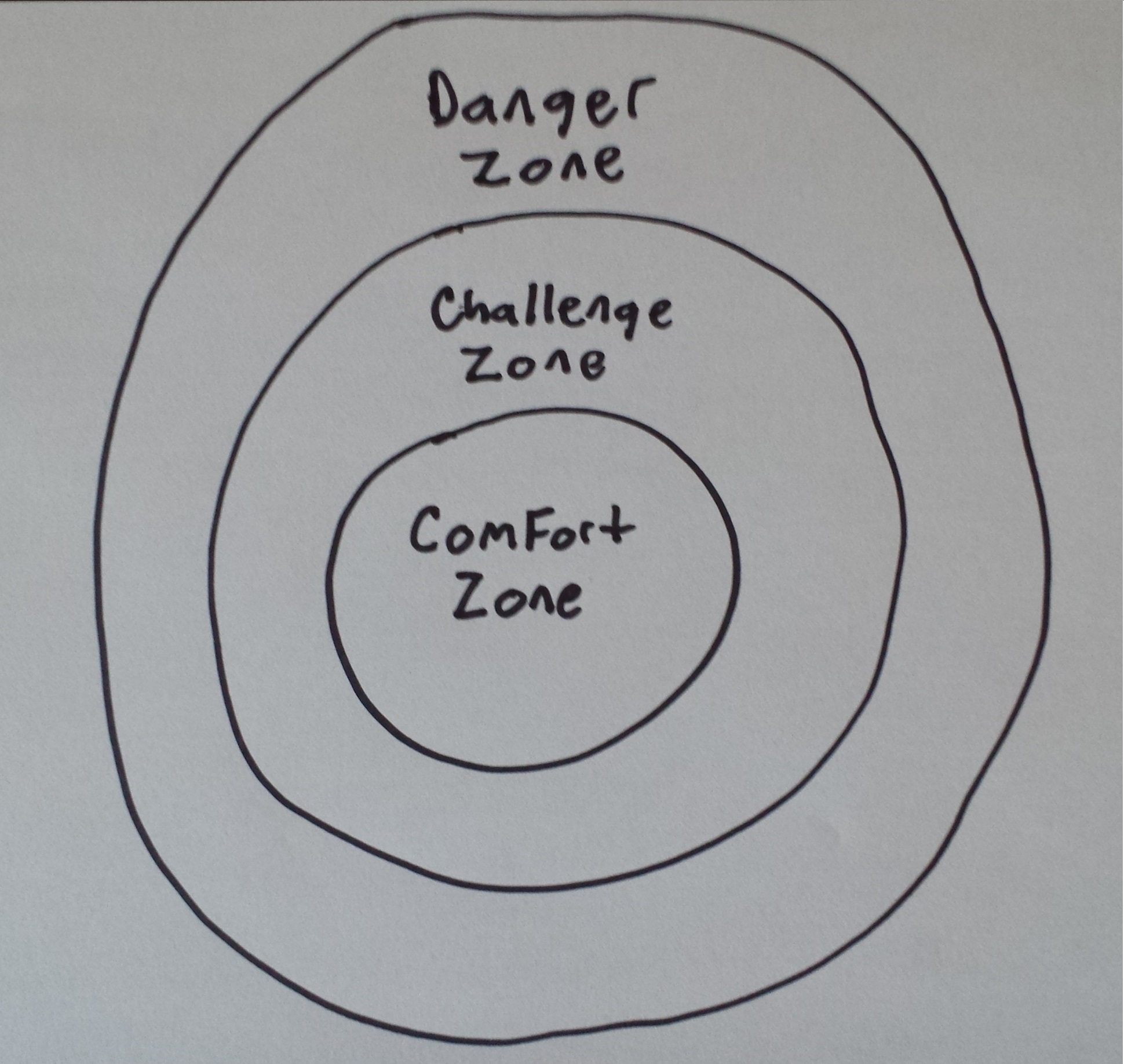
I think there are 3 sections relating to our Comfort Zone that look like the following:

ComfortZoneGraphic-4-Jul-15

The characteristics of each section are as follows:

Our Comfort Zone:

  • Things you attempt are easy to accomplish
  • Success is almost certain
  • This space can expand as we master items in our Challenge Zone

Our Challenge Zone:

  • Things in this zone represent endeavors we have not yet attempted, or are in the early stages of trying
  • Success is not certain, but is likely with practice and continued effort
  • Mastery of items in this zone causes those items to move out of our Challenge Zone and into our expanded Comfort Zone

Our Danger Zone:

  • Items in this space represent skills or talents we do not yet , or may never, possess
  • Outcomes are disastrous at best; dangerous at worst
  • Items in this space can move into our Challenge Zone, and even our Comfort Zone, but only after significant effort, failure, and disciplined practice; it is a slow process

When we step out of our Comfort Zone, we should look for those items that lie within our Challenge Zone, perhaps those items close to, but not exceeding, the far edge of our Challenge Zone.  These items are the ones that will stretch us the most and cause the most rapid growth.

Take for example, a person who wants to be an airline pilot who has never flown an airplane before.  They would not start out flying a 500+ passenger aircraft for a major airline.  That would certainly be in their Danger Zone and would have disastrous consequences.  They’d first start out learning to fly small single engine airplanes.  Initially, this would be something that would be in their Challenge Zone, but as they spend time with a flight instructor, they would eventually develop mastery in this area.  At that point, flying small single engine aircraft would be in their Comfort Zone and they would be ready to move to move up to the next larger aircraft that is in their Challenge Zone.  They would continue learning to become familiar with increasingly complex aircraft, until that 500+ passenger aircraft has moved from their Danger Zone into their Challenge Zone.  At that point, they would begin training in that aircraft, until its mastery, which was once in their Danger Zone, becomes part of their Comfort Zone.

Moving items from the Danger Zone to the Comfort Zone is a process that is usually timely and slow, so patience and discipline is required.

What items would you like to add to your Comfort Zone?  What item in your Challenge Zone can you begin working on today to move you one step closer to its mastery and an eventual placement in your Comfort Zone?  Don’t wait!  Get started today and begin seeing your Comfort Zone expand as you achieve things you never thought possible.

The Clairity from Writing it Down

I’ve recently got back into the habit of daily journaling and have been amazed at the positive impact this discipline has on me.

When I journal, I often write about improvements I want to make in my life and what I’m’ currently struggling with or working toward.  The exercise of giving thought to a topic and spending several minutes putting these thoughts on paper give me the following:

  • Clarity of direction
  • New ideas
  • A way to process and organize my unformed thoughts

When I don’t journal, I find I only spend a few brief minutes each day thinking about what I’m working on, pursuing, or struggling with.  This brief, unfocused thinking always leaves me void of any real plan or direction I can take to make progress in that day.  However, when I journal, especially in the morning before the day gets started, I gain a clarity about whatever issue I’ve written about, but more important, I feel energized and eager to jump in and get the day started.

If you’re considering the practice of daily journaling, here are 3 suggestions that I find helpful:

  • Pick a consistent time every day. Do mornings work best for you or evenings before bed?  Perhaps around lunch time works best.  It doesn’t matter at all what time you journal.  What does matter is that you find a time that you can commit to as much time as you need to journal, whether it’s 5 minutes or an hour.  Find what works for you.
  • Find a journal that you like the feel of. This may seem like a funny thing, but the journal you right on must “feel” right.  Does it fit well in your hand or on your lap?  Do you like pages with lines or blank pages?  Do you prefer a spiral binding, a yellow note pad, or leather bound journal?  I prefer a smaller size page (because it feels like I write more) and I also prefer a journal that lays open nicely.  It doesn’t matter what your preference is, as long as your journal feels right for you.  It should be something you want to spend time with.
  • Write about topics that interest you. I mentioned above how I like to write about what I’m working on our struggling with, but that doesn’t have to be what you write about.  Maybe you want to write about what you did that day, or keep a list of ideas, or record significant events.  Perhaps you just want to write about whatever is on your mind.  Those are all great topics! As long as you’re writing about something that is interesting to you, you’ve got the right topic.

Of these suggestions, I think that finding a consistent time to write is the most important to maintaining consistency.

If you want to increase the clarity of thinking,  make significant progress toward achieving your goals, or just be more mindful of what direction you’re leading your life, I suggest giving journaling a try.  Your writing doesn’t have to be eloquent, flowery or even grammatically correct.  It just has to be a written expression of whatever is on your mind.

Getting from Here to There

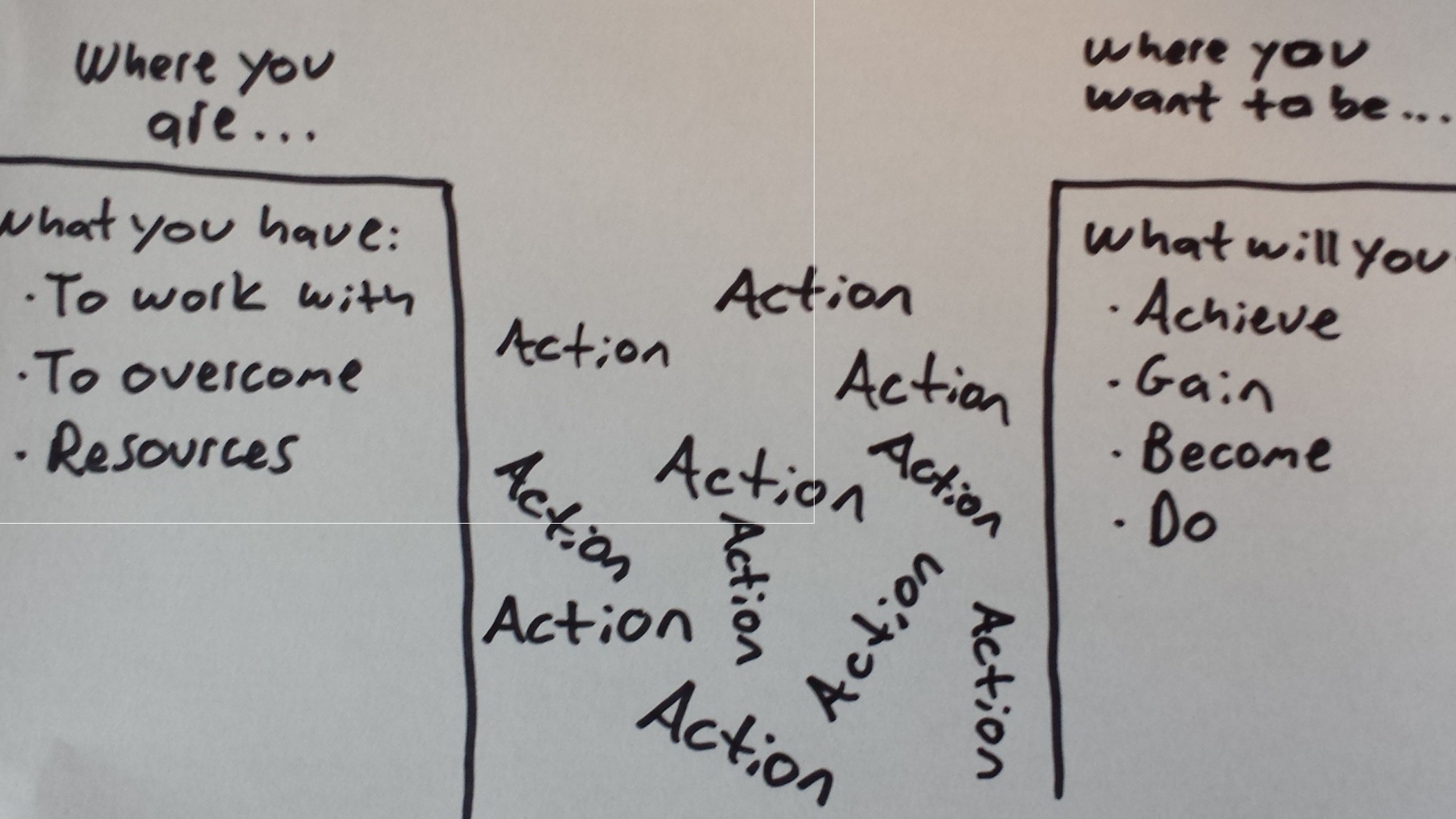
From the perspective of achieving your goals, getting from where you are to where you want to be can often feel overwhelming.  Especially if we’re unsure about the steps we need to take to get there.  The following visual exercise can be very helpful in gaining clarity on what we need to do to start moving forward.

First, make a write in where you are, and where you want to be, as shown below.

Step 1

Second, on the left side of the page, fill in what you currently have in the way of resources and things to work with and overcome.  This gives you a starting point.  On the right side of the page, note what you will have once you achieve your goal.  This will help provide motivation, clarity, and direction.

Step 2

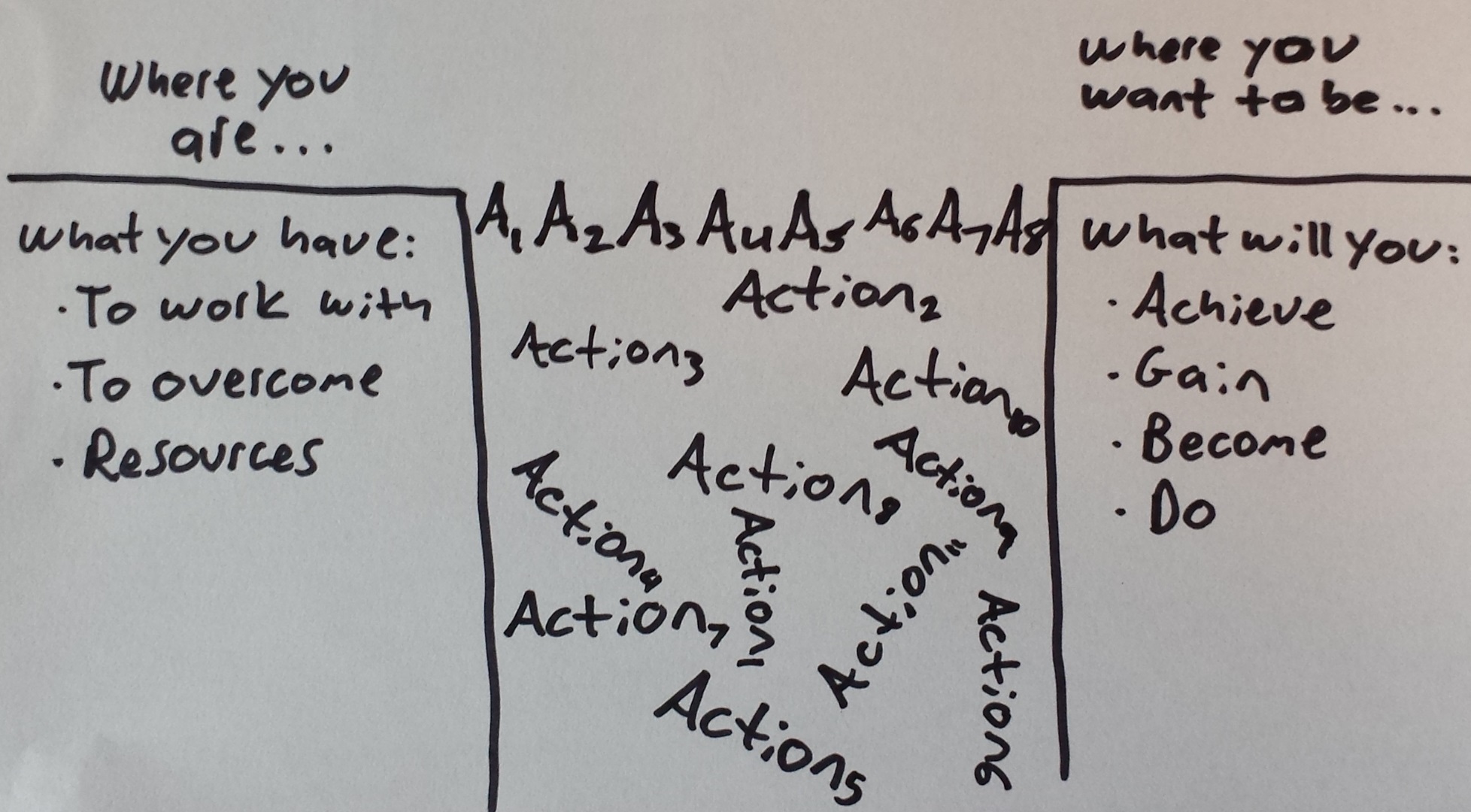
Next, think of all the major tasks you need to take to get from where you are to where you want to be.  The list doesn’t even have to be in order, or 100% complete.  Just start thinking of all the tasks that you need to do and list them in the gap on the page between where you are and where you want to be.

Step 3

At this point we know where we are, where we want to be, and a bunch of tasks that need to be done to get there.  The next step is to number the tasks in the order we need to complete them.  This is where our action plan gets created.  When you’re done with this step, you should have a plan to bridge the gap between where you are and where you want to be.

Step 4

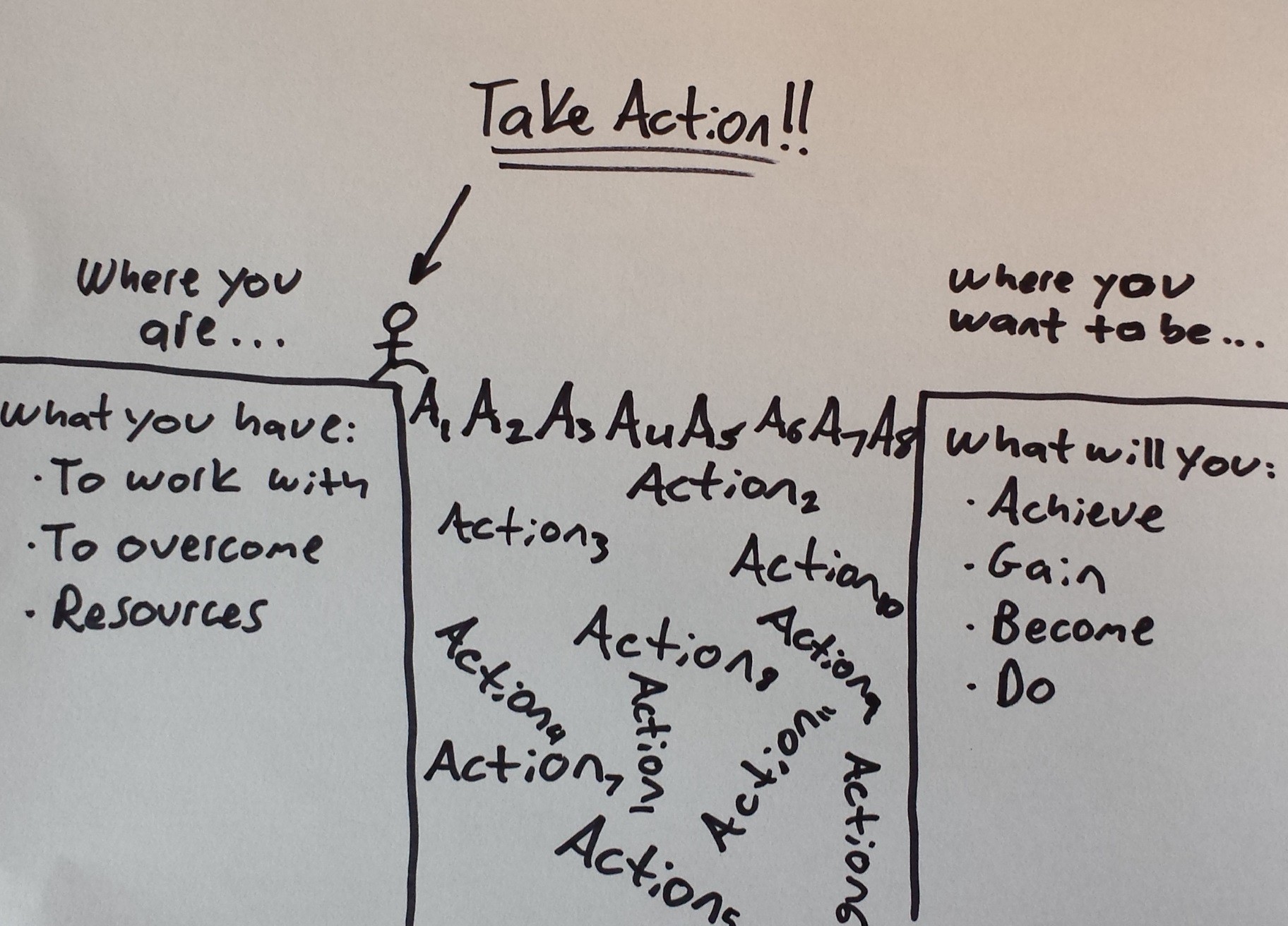
Now, we come to the most important step in the process:  TAKE ACTION!  The best plan is useless until we take action toward implementing it.

Step5

If you’ve got a goal you’d like to achieve, but need a plan on how to achieve, try this simple exercise.  It will give you clarity on what needs to be done, and motivation to see what you’re moving toward.

Just remember that the most important thing you can do, once you’ve completed the plan, is take action.  Your goals are waiting.  Start today.

Why it’s not Always Good to Have All the Answers

It’s nice to have the answer to a question or problem.  But what happens when we think we have all the answers to every question, and that our answers are better than everyone else’s?

Here are 5 dangers of thinking we have all the answers:

  1. We won’t gain new skills and experience. When we think we have all the answers, we aren’t open to trying new approaches to solving problems.  This keeps us from gaining new skills that come from new experiences.
  2. Our problem solving skills will not improve. If we already know the answer to every question, we won’t have opportunity to exercise our problem solving skills.  Instead, we’ll continue to simply rely on our own limited knowledge and miss the challenge of considering new methods to solve a problem.
  3. We won’t be able to collaborate with or leverage the knowledge of others. If think we know everything, we won’t seek assistance from others, or avail ourselves to the knowledge and experience they have.  This limits our exposure to new thoughts and ideas that we may have never heard or considered.
  4. We are not likely to attract or keep good thinkers on our teams. Good thinkers don’t want to be around people that have all the answers, because good thinkers like to think and share ideas. If we have all the answers, the good thinkers around us will go elsewhere; and take their good thinking with them.
  5. We’ll never create anything bigger than ourselves. If we rely only on what we know and our limited answers, we waste opportunities to collaborate with others in order to create something that is much bigger than ourselves.  How can we possibly create something bigger than ourselves if we only rely on our own limited knowledge?

Don’t get me wrong, its’ good to have answers to questions and problems, and when we have answers, we should share them with others.  However, I think it’s foolish to assume that we are possible of having ALL the answers to EVERY problem or question.

If, in the very rare case, we do indeed have all the answers to every question or problem we encounter, that is probably a good indication we need to step out of our comfort zone and do something else.